


SOURCE:
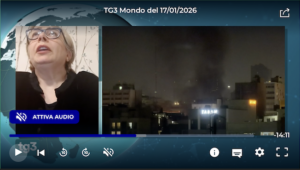
TRANSLATED AUDIO TRANSCRIPTION:
Interviewer:
We are connecting with an important witness of what is happening in Iran. Mahsa Mohebali, a writer who, in her books, portrays modern Iran. Her latest book published in Italy is called Tehran Girl. Good evening and welcome.
Have you been able to speak with your friends in Tehran? What is the situation?
Mohebali:
Yes, in recent days I have spoken with some friends who have Starlink, and they sent me terrible images. Later, I found out they were arrested. Now all my friends are very cautious on the phone: they are afraid of being intercepted, they never speak for more than a minute, they are scared and say nothing, just “I’m fine, don’t worry.” They are afraid. Then there are those who don’t speak but cry, cry for minutes on end.
Interviewer:
In your opinion, will these protests lead to the fall of the regime, or what do you expect?
Mohebali:
I believe we are witnessing the convergence of two protest movements. In the streets, there are the women of the “Woman, Life, Freedom” movement, but also those who cannot make ends meet or cannot afford food due to inflation. For this reason, we are experiencing a revolutionary moment. I believe the time for change has come.
Interviewer:
Would a U.S. military intervention be part of the solution or part of the problem?
Mohebali:
The international community must act. Those who believe in human rights must not remain silent: they are massacring women, young people, unarmed individuals. I truly wish the protesters could carry out the revolution, but we have seen the government shooting its own citizens, we have seen how it is lying. They have shut down the internet to prevent the massacres and crimes they are committing from being reported. Seeing the world remain silent is unacceptable.
Interviewer:
You are doing this interview without hiding your face and without a veil, which is still mandatory for women in Iran. Do you think you will return to Iran? What awaits you when you return?
Mohebali:
Many years ago, I did an interview without a veil on the BBC. My friends begged me not to return, but I went back anyway. The regime’s agents came to search my house, they followed me everywhere, my phone was under surveillance, and they prevented me from leaving the country for two years. I have already had many problems. I believe we should not censor ourselves. I don’t care what they will do to me after what has happened. I want, I must be the voice of my people. If what I am saying now were said by a young man in Tehran, he would already have been arrested. So I must speak. We are becoming like North Korea—a dictatorship about which nothing is known.
Interviewer:
So you will return, and what will happen to you?
Mohebali:
It’s a difficult question. I hope to be able to return. My visa expires in two months; I don’t know what will happen, and I don’t want to think about it now.
Interviewer:
Thank you, thank you for your testimony. Stay safe.
Original Audio transcription (Italian):
I:
Ci colleghiamo con un importante testimone di quanto sta accadendo in Iran. Mahsa Mohebali, scrittrice che nei suoi libri racconta l’Iran moderno. Il suo ultimo libro uscito in Italia si chiama Tehran Girl. Buonasera e benvenuta.
Lei è riuscita a parlare con i suoi amici a Tehran: qual è la situazione?
M:
Sì, in questi giorni ho parlato con alcuni amici che hanno Starlink e mi hanno mandato immagini terribili. Dopo ho saputo che sono stati arrestati. Ora tutti i miei amici sono molto cauti al telefono: hanno paura di essere intercettati, non parlano mai più di un minuto, hanno paura e non dicono nulla, solo “sto bene, non ti preoccupare”. Hanno paura. Poi c’è chi non parla ma piange, piange per minuti interi.
I:
Secondo lei queste proteste porteranno al crollo del regime oppure cosa prevede?
M:
Credo che stiamo assistendo alla riunione di due movimenti di rivolta. In piazza ci sono le donne del movimento “Donna, vita, libertà”, ma anche chi non arriva a fine mese o chi non riesce a comprare da mangiare per l’inflazione. Per questo stiamo assistendo a un momento rivoluzionario. Credo che sia arrivato il momento del cambiamento.
I:
Un intervento militare americano sarebbe parte della soluzione o del problema?
M:
La comunità internazionale deve intervenire. Chi crede nei diritti umani non deve rimanere in silenzio: stanno massacrando donne, ragazzi, persone disarmate. Vorrei tanto che i manifestanti potessero fare la rivoluzione, ma abbiamo visto il governo sparare sui propri cittadini, abbiamo visto come sta mentendo. Hanno tolto internet per evitare che vengano denunciati i massacri e i crimini che stanno commettendo. Vedere che il mondo rimane in silenzio non è accettabile.
I:
Lei sta facendo questa intervista senza nascondere il suo volto e senza il velo, che è ancora obbligatorio per le donne in Iran. Lei pensa di tornare in Iran? Che cosa la aspetterà quando tornerà?
M:
Molti anni fa ho fatto un’intervista senza velo alla BBC. Le mie amiche mi hanno scongiurato di non tornare, ma io sono tornata lo stesso. Gli uomini del regime sono venuti a perquisire la mia casa, mi seguivano ovunque, il telefono era sotto controllo, mi hanno impedito di uscire dal Paese per due anni. Ho già avuto tanti problemi. Credo che non dobbiamo censurarci. Non mi importa cosa mi faranno dopo quello che è successo. Io voglio, io devo essere la voce della mia gente. Se quello che dico ora l’avesse detto un ragazzo a Tehran, lo avrebbero già arrestato. Quindi devo parlare: stiamo diventando come la Corea del Nord, una dittatura di cui non si sa nulla.
I:
Quindi lei tornerà e cosa le succederà?
M:
È una domanda difficile. Spero di poter tornare. Il mio visto scade tra due mesi, non so cosa succederà e non ci voglio pensare ora.
I:
Grazie, grazie per la sua testimonianza. Stia al sicuro.
