


SOURCE: Eldiario by Mahsa Mohebali, 12.2.2026 https://www.eldiario.es/internacional/iran-corona-turbante-momento-revolucionaria-47-anos-lucha-teocracia_129_12979757.html
Automated Maschine Translation:
Iran, Between the Crown and the Turban: This Photo Defines My 47 Years of Struggle Against Theocracy
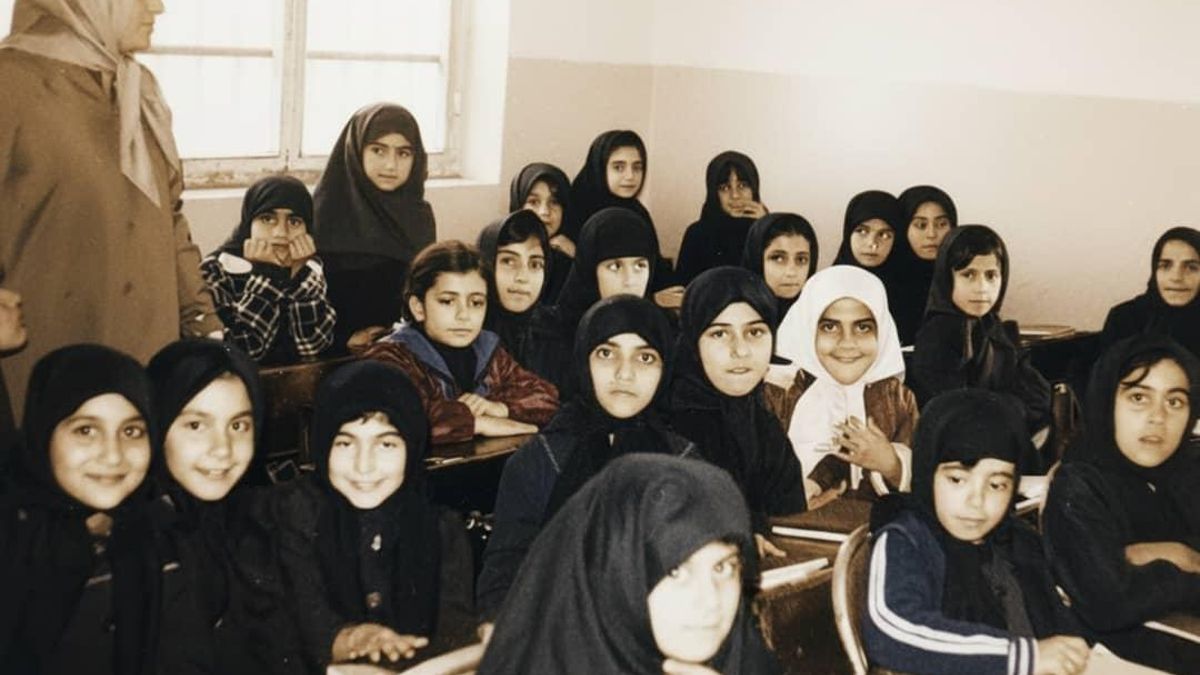 Mahsa Mohebali as a child during a school photograph in which all the girls wore veils. Image provided by the author
Iran, between the crown and the turban: this photo defines my 47 years of struggle against the theocracy
Iranian writer Mahsa Mohebali recalls her childhood experience during the 1979 Islamic Revolution and the echoes it casts on today’s protests, set against the historical Persian duality between monarchical and religious power.
February 11, 2026, 22:57 — Updated February 12, 2026, 10:39
On April 1, 1979 (12 Farvardin 1358 in the Iranian calendar), exactly one month and 20 days after the Iranian Revolution, I realized that my part of the revolution had ended—it had run its course. I was seven years old, and the feeling of the revolution’s victory was intertwined with the closing of schools, the scent of spring, and budding plants. In my navy blue pleated skirt, I felt a sense of freedom and well-being. I insisted that we go vote like everyone else; I liked the “game of the revolution.”
“Would you like to wear the chador (hijab)?” my father asked.
“No… Well, then we’ll vote ‘no’ to the Islamic Republic,” I replied.
“Why only Islamic Republic, yes or no? What about the rest of the ideologies? What about those who want a secular republic or other people and their beliefs?” My father said that this very kind of referendum showed that the funeral of the revolution had already been held. “They stole the revolution from us.”
For my seven-year-old mind, it was hard to understand how Ayatollah Khomeini, who just two months earlier had been the leader of the revolution, had now become a “thief” and an object of hatred for some revolutionaries. From that day on, our part of the revolution ended and turned into the insults my father and his friends hurled at the television. Once, my father threw a slipper at it, and my mother stopped speaking to him for a week.
I tried to understand the connection between my father’s anger and what was happening on television, but it was difficult. When people sat in front of the camera and confessed their mistakes and their status as spies, what exactly made my father so furious? Eventually, my mother’s will prevailed, and the television was completely turned off.
These days, when people look to the sky hoping that American or Israeli fighter jets will come to their aid, I ask myself: what will be the role of the people in this bloody war and revolution? Once again Pahlavi, yes or no?
When my father came home from work in the afternoons, he would spread the newspaper on the floor, clip his fingernails and toenails, and read the entire paper—even the obituaries. Then he would crumple it up and throw it in the trash. After that, he would take his sleeping pill and retreat to the bedroom; some days he would not get out of bed at all. His students would come to the house and solve their problems in the bedroom. In the black decade of the 1980s (the 1360s in the Iranian calendar), the dark cloud of sleep and death took over the house.
The Iran–Iraq war began: the anxiety of death, doing homework by candlelight. My uncle went to the front and returned without hands; my aunt was imprisoned. Everything turned black. Black, black, black.
These days, when I see people shouting the name of Reza Pahlavi; when I see everyone saying that the Islamic Republic must go and that whoever comes next will be better; when people look to the sky hoping that American or Israeli fighter jets will come to their aid, I ask myself: what will be the role of the people in this bloody war and revolution? Once again Pahlavi, yes or no? One month and 20 days of our share of freedom? Is history repeating itself? Reza Shah II, yes or no?
When the choice is reduced to oneself or nothing, the ballot will produce oneself. Anything is more than zero. Is it my people’s fate to constantly fluctuate between the Shah and the Mullah, swinging like a pendulum from the embrace of one to refuge in the other?
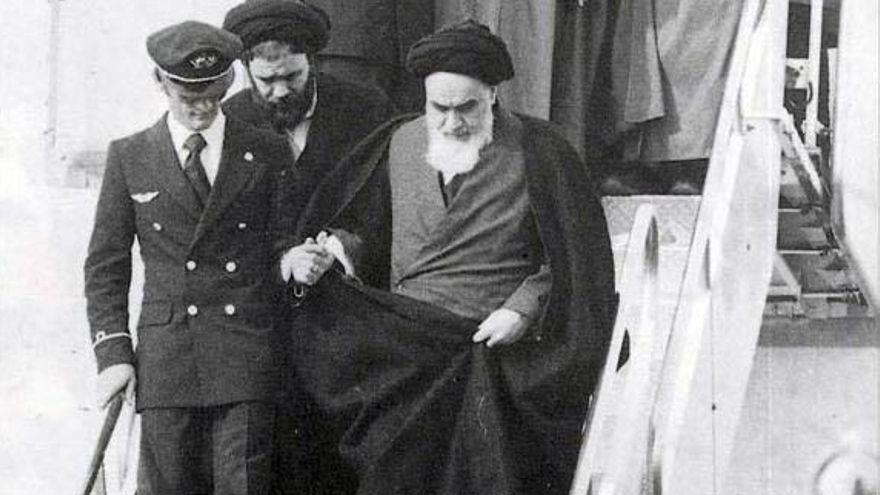 Khomeini disembarking from the Air France charter plane upon his arrival in Tehran. CC
I look at my neighboring countries: Afghanistan with its Taliban, Pakistan with its atomic bomb, India with its corruption, Iraq with its coups and dictators, Syria with ISIS, and the massacres of Kurds and Armenians in Turkey. Does Iran really have the potential and the capacity to escape its geopolitical destiny? In the balance of power, what kind of Iran do neighboring countries tolerate?
Sometimes we dress the Shah in Farrah-e Izadi (divine glory). Then we revolt and place that divine glory onto the cleric’s turban.
And now, I begin again… I am 54 years old; I lived seven years under the monarchical system and 47 long years under the clerical system. Without a doubt, I hate the theocratic system of the Islamic Republic. As a teenager, I was arrested many times for not wearing the hijab; I cried and signed pledges. My friends were arrested and flogged for drinking alcohol. I was detained for walking down the street with a boyfriend.
Our generation has fought for the bare minimum of a normal life. Forty-seven years of struggle of the people against theocracy, against a government that has placed the hand of God on the throne of power and moves forward without restraint. It wants the atomic bomb. It feeds allied forces in the region. Even part of the European left is now confused… If Israel is bad, Iran is good. So are Iranians who support Israel bad? Is the enemy of my enemy my friend? Or the enemy of my friend my enemy?
I was nine years old when the school principal came into the classroom and ordered all of us to wear the hijab because a photographer wanted to take our picture. I didn’t have a scarf; I sat down and tried to make myself small, small and invisible so no one would notice that I was the only one without a hijab among those 40 people. Miraculously, I became invisible. My father framed that photo as a sign that his daughter was a “fighter” and placed it on his desk.
I wish this generation, which does anything to survive, would remember that it must be demanding. It must claim its share of power. I hope these 47 years are a light on their path and have not made them so stupid and abject as to place the bird of fortune on the shoulders of the Shah and the Mullah. Power rests on the shoulders of men and women who claim the right to a normal life.
One month later, I was reprimanded for carrying the book The Little Red Star in my backpack. My father laughed and said, “It’s your fault; I told you it was dangerous.” He was right. It was my fault. I had seen my father and my uncles carrying sack after sack of books to the outskirts of Tehran to burn them. Everyone’s libraries grew thinner and thinner. My father said he would not come to school to intercede for me. I cried. My father said that if the book was so good that I wanted to share it with my friends, I should be able to defend it.
The story of the book—later I learned it was about Mazdak, a 6th-century reformist priest—was about a child born with a small red star on his forehead. Unfortunately, at that same moment, the king’s dream interpreter said that any child born with a red star would bring about the king’s destruction.
The soldiers search, find the child, and kill him, but every time they kill one child, ten more are born with a red star. I tried to explain to the teacher, the supervisor, and the principal why it was a good book. I don’t remember what I said; in any case, whatever I said or however much I cried, it was useless. I didn’t want to be expelled. I wasn’t a fighter; fighters don’t cry.
Finally, my mother came to my rescue. My mother had a taghouti style [Westernized elite lifestyle under the Shah] and claimed that the child had no judgment and had made a mistake, and the matter was settled. My mother’s taghoutiappearance saved me; it didn’t fit with The Little Red Star. If a mother wearing Chinese slippers and a navy coat had come to intercede for me, or a father with Stalinist mustaches, I would have been lost. You see, even here the cleric and the Shah were more harmless together. Honestly, one wonders: how is it possible?
If my part of this revolution was also only that month and 20 days, later I can say that in my 54 years of life I have tasted freedom twice. Three months and 10 days of freedom in 54 years of life; I have been free less than one percent of my life. But one can hope. Three months and 10 days is the time it takes for an embryo to become a fetus. Perhaps this three-month fetus can grow and someday become a small child. Perhaps this time people will be smarter than the last time. The people making the revolution now are educated. Everyone in Iran has a degree. Believe me.
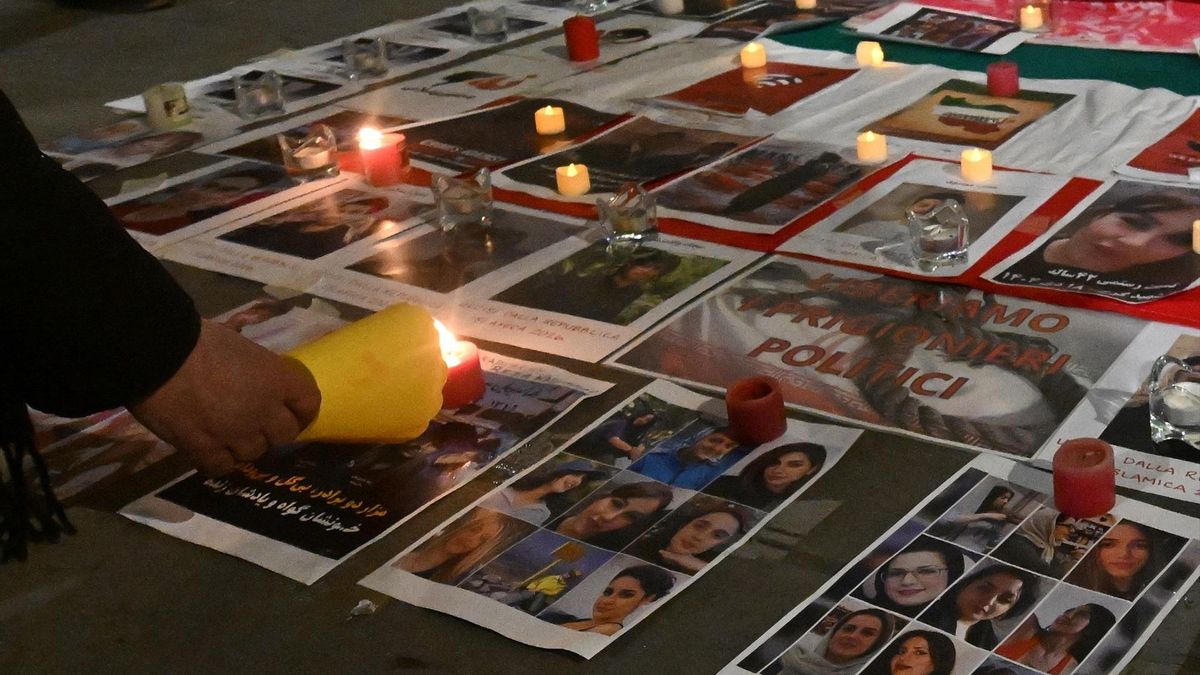 Demonstration for the victims of the protests in Iran, January 20, 2026, in Florence, Italy. Europa Press/Aleandro Biagianti
Once, ten years ago, I hired a company to send a lady to help me with household chores. A girl named Mahtab came; she looked at the books and asked: “Are you a writer or a translator?” I was stunned. Why couldn’t I be something else? She said: “Only writers and translators have so many books.” When I tried to help her clean the house, she gave me a condescending look and said: “Look, I have a degree in Commerce, but since my mother is bedridden and I have to pay my brother to take care of her, I came to work as a laborer. I’ve been doing this for 10 years and I know my job. You go sit in your room and work; we don’t pay taxes for you to be lazy.”
From that day on, Mahtab took control of the house. Cleaning was her specialty, and we, with a technocratic vision, handed the house over to her. Mahtab read my stories and sometimes scolded me: “Write about real life.” Sometimes I forced her to tell me her stories. She laughed and said: “My brother was fired from the company; he doesn’t get along with my other brother who takes care of my mother. Last week they fought. My brother threatened that when I leave the house, he will take my mother to a state care home. He does it to annoy me, so I can’t work.”
But what did her mother say? “Don’t worry, Mahtab. If he wants to take me to the care home, he will have to carry me; my hands will grab his neck when he lifts me. Right there, at the top of the stairs, I’ll let go to fall and die. Don’t worry, he can’t take me to the care home; I’ll throw myself from his shoulders and die.” And she laughed, and Mahtab laughed, and I laughed. I imagine myself as an elderly bedridden woman, and when my son tries to take me to the care home, I will laugh loudly and say: “Take my corpse to the care home; you cannot bury me alive. I won’t allow it.” And I laugh out loud again.
I grew up in the years of terror and horror, the years of the inquisition. I absolutely do not want my country to fall into the hands of such people again. Let’s suppose they have swapped the turban for the crown.
I was 10 years old when I passed the academic exam for the school for gifted children. We also had to take an ideological test and then an oral interview. The night before the interview, I tried to memorize the names of two or three mullahs and some Islamic books; my father caught me and said: “Be yourself.”
The next day, in the interview, I kept repeating my father’s words. When asked, “What books do your parents read?” I attributed the word Towzih al-Masa’el [a theological work of Khomeini] I had just learned to the names of all the clerics I heard daily on television and invented a bunch of fiction books. But when they asked me, “If you knew your parents opposed the government, would you report them or not?” I really froze. A terrifying question for a 10-year-old: your parents versus a better school. I think the impact of this question was so great that I don’t even remember what answer I gave. From that day, the seed of a traitor was planted in me. Even thinking about the possibility of accessing a better education in exchange for betraying your family… no.
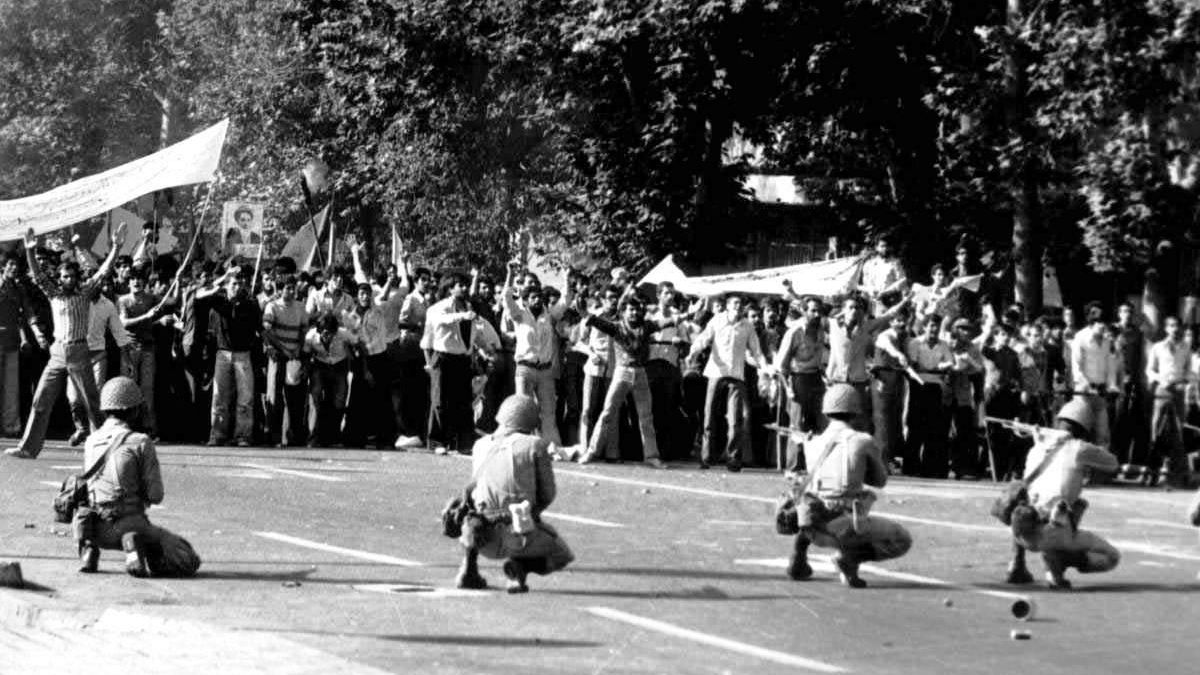 Image of the protests in Iran in 1978. CC
Well, I was never admitted to that school. Perhaps from my rejection I can conclude that I looked interrogators in the eye and said: “No… never.” Or even: “You have no right to ask a 10-year-old this; this is a violation of a child’s soul.” I don’t know what I said. Certainly, my mind would not have come up with such things. At that moment, did I remember my father’s words? Was it “be myself”? Who was “myself”? I, who cannot recall what answer I gave. Perhaps due to intense shame, my memory has decided to erase that dark part of my soul so I never remember if “myself” was a betrayer and ambitious or compassionate and losing.
After that moment, my soul split in two: the girl who, out of love for her parents, gave up the gifted school and said “never,” and the other girl who sold her soul and said “of course.” Whatever the case, I have at least considered these two possibilities. An extraordinary education with a devilish soul, or an ordinary school with a fighting soul? What does it matter? I don’t know what kind of illnesses a child psychiatrist would diagnose in me. Perhaps they would find every possible mental illness in a fascist system.
Well, my part of this revolution—besides that three-month and ten-day fetus I hope will grow—is perhaps the black years of the inquisition. Let us not forget, let it be engraved on our forehead. I hope this generation, which does anything to survive, remembers that it must be demanding. It must claim its share of power. I hope these 47 years are a light on their path and have not made them so stupid and abject as to place the homay-e Sa’adat [bird of fortune, a mythological symbol of prosperity] on the shoulders of the Shah and the Mullah. The bird of fortune rests on the shoulders of men and women who claim the right to a normal life.
Hoda Afshar, artist: “The struggle of Iranian women goes far beyond the hijab”
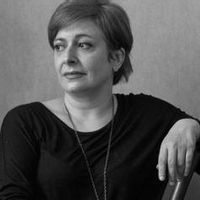
Writer, literary critic, and Iranian screenwriter, considered one of the most prominent voices of the third generation of fiction in her country. Her works mix fiction and social critique, with a focus on gender issues, social crises, and the challenges faced by the queer community and new generations in contemporary Iranian society. Her works include Don’t Worry (The Feminist Press at CUNY, 2021, also titled In Case of Emergency), the story Lovemaking in the Footness(Hanging Loose Press, 2020), awarded the Houshang Golshiri Literary Prize, and the novels Tehran Girl (Bompiani, 2020) and Téhéran Trip (La Croisée, 2023). Due to the critical nature of her works, Mohebali has been pressured and monitored by Iranian security forces, who have banned the publication or reissue of her texts. Since 2025, she resides in Catalonia with support from the Artists at Risk and No Callarem networks.
PRESS TEXT:
Irán, entre la corona y el turbante: esta foto define mis 47 años de lucha contra la teocracia
— No… Bueno, entonces votaremos ‘no’ a la República Islámica —contesté.—¿Por qué solo República Islámica, sí o no? ¿Qué pasa con el resto de las ideologías? ¿Qué hay de aquellos que quieren una república secular o de las demás personas y sus creencias? —Mi padre dijo que este mismo tipo de referéndum demostraba que el funeral de la revolución ya se había oficiado— Nos robaron la revolución.Para mi mente de siete años era difícil entender cómo el ayatolá Jomeini, que hasta hacía solo dos meses era el líder de la revolución, se había convertido ahora en un “ladrón” y en objeto de odio para una parte de los revolucionarios. Desde aquel día, nuestra parte de la revolución terminó y se transformó en los insultos que mi padre y sus amigos lanzaban al televisor. Una vez, mi padre le arrojó una zapatilla y mi madre le dejó de hablar durante una semana.
Yo intentaba comprender la relación entre la rabia de mi padre y lo que ocurría en la televisión, pero era difícil de entender. Cuando las personas se sentaban frente a la cámara y confesaban sus errores y su condición de espías, ¿qué era exactamente lo que enfurecía a mi padre? Finalmente, la voluntad de mi madre prevaleció y el televisor se apagó por completo.
Estos días en que la gente mira al cielo esperando que los cazas estadounidenses o israelíes vengan en su ayuda, me pregunto: ¿cuál será el papel del pueblo en esta guerra y revolución sangrienta? ¿Otra vez Pahlavi, sí o no?
Cuando mi padre regresaba del trabajo por las tardes, extendía el periódico en el suelo, se cortaba las uñas de las manos y los pies y leía todo el diario. Incluso las esquelas. Luego lo arrugaba y lo tiraba al cubo de la basura. Después se tomaba su pastilla para dormir y se refugiaba en el dormitorio; algunos días no salía de la cama para nada. Sus alumnos venían a casa y resolvían sus problemas en el dormitorio. En la década negra de los 80 (los años 60 en el calendario iraní), la nube negra del sueño y la muerte se apoderó de la casa.Comenzó la guerra entre Irán e Irak: la ansiedad de la muerte, hacer los deberes a la luz de las velas. Mi tío fue al frente y regresó sin las manos; mi tía fue encarcelada. Todo se volvió negro. Negro, negro, negro.Estos días en que veo a la gente gritar el nombre de Reza Pahlavi; estos días en que veo que todos dicen que la República Islámica debe irse y que cualquiera que venga será mejor; estos días en que la gente mira al cielo esperando que los cazas estadounidenses o israelíes vengan en su ayuda, me pregunto: ¿cuál será el papel del pueblo en esta guerra y revolución sangrienta? ¿Otra vez Pahlavi, sí o no? ¿Un mes y 20 días de nuestra parte de libertad? ¿Se repite la historia? ¿Reza Shah II, sí o no?Cuando la elección se reduce entre uno mismo y la nada, de la urna solo saldrá uno mismo. Cualquier cosa es más que cero. ¿Es el destino de mi pueblo fluctuar constantemente entre el Shah y el Mulá, oscilando como un péndulo del abrazo de uno al refugio en el otro?

Miro a mis países vecinos: Afganistán con sus talibanes, Pakistán con su bomba atómica, India con su corrupción, Irak con sus golpes de Estado y dictadores, la Siria del ISIS y las matanzas de kurdos y armenios en Turquía. ¿Realmente tiene Irán el potencial y la capacidad de escapar de su destino geopolítico? En los equilibrios de poder, ¿qué tipo de Irán toleran los países vecinos?A veces vestimos al Shah con la Farrah-e Izadi (gloria divina). Luego nos revolucionamos y bajamos esa gloria divina sobre el turbante del clérigo.Y ahora, vuelvo a empezar… Tengo 54 años; viví siete años bajo el sistema monárquico y 47 largos años bajo el sistema de los clérigos. Sin duda, odio el sistema teocrático de la República Islámica. Como adolescente, fui detenida muchas veces por no llevar el hiyab, lloré y firmé compromisos. Mis amigos fueron detenidos y azotados por beber alcohol. Fui detenida por caminar por la calle con un novio.Nuestra generación ha luchado por los mínimos de una vida normal. 47 años de lucha del pueblo contra la teocracia, contra un gobierno que ha sentado la mano de Dios en el trono del poder y que avanza sin frenos. Quiere la bomba atómica. Alimenta a fuerzas afines en la región. Incluso parte de la izquierda europea ya está confundida… Si Israel es malo, Irán es bueno. Entonces, ¿los iraníes que quieren a Israel son malos? ¿El amigo de mi enemigo es mi amigo? ¿O el enemigo de mi amigo es mi enemigo?Tenía nueve años cuando la directora de la escuela vino a la clase y ordenó que todas usaran hiyab porque un fotógrafo quería tomarnos una foto. Yo no tenía pañuelo; me senté e intenté hacerme pequeña, pequeña e invisible, para que nadie se diera cuenta de que yo era la única sin hiyab entre esas 40 personas. De milagro, me volví invisible. Mi padre enmarcó aquella foto como señal de que su hija era una “luchadora” y la puso sobre su escritorio.
Ojalá esta generación, que hace cualquier cosa por sobrevivir, recuerde que debe ser exigente. Debe reclamar su parte del poder. Ojalá estos 47 años sean una luz en su camino y no la hayan vuelto tan estúpida y abyecta como para poner el pájaro de la fortuna sobre los hombros del Shah y del Mulá. El poder está sobre los hombros de los hombres y mujeres que reclaman el derecho a una vida normal
Un mes después, fui reprendida por llevar el libro La pequeña estrella rojaen mi mochila. Mi padre se rio a carcajadas y dijo: “Es culpa tuya, te dije que era peligroso”. Tenía razón. Era mi culpa. Había visto a mi padre y a mis tíos llevar sacos y sacos de libros a las afueras de Teherán para quemarlos. Las bibliotecas de todos adelgazaban y adelgazaban. Papá dijo que no vendría a la escuela a interceder por mí. Lloré. Mi padre dijo que si ese libro era tan bueno que quería compartirlo con mis amigos, debería ser capaz de defenderlo.La historia del libro —que más tarde supe que era el relato de Mazdak [histórico sacerdote reformista del siglo VI]— trataba de un niño que nacía con una pequeña estrella roja en la frente. Para su mala suerte, en ese mismo momento, el intérprete de sueños del Rey decía que el niño que naciese con una estrella roja en la frente llevaría al Rey a la destrucción.Los soldados buscan, encuentran al niño y lo matan, pero cada vez que matan a un niño, nacen otros 10 con una pequeña estrella roja en la frente. Intenté explicar a la maestra, al prefecto y a la directora por qué ese era un buen libro. No recuerdo qué dije; en cualquier caso, dijera lo que dijese o por mucho que llorara, no sirvió de nada. No quería ser expulsada. Yo no era una luchadora; los luchadores no lloran.Finalmente, mi madre vino a mi rescate. Mi madre tenía un aspecto taghouti [estilo de vida, moda y cultura asociados con la clase alta y la élite occidentalizada durante el reinado del Shah] y alegó que la niña no tenía juicio y que había cometido un error, y el asunto se zanjó. El aspecto taghouti de mi madre me salvó; no encajaba con la Pequeña estrella roja. Si una madre con zapatillas chinas y un abrigo azul marino hubiera venido a interceder por mí, o un padre con bigotes estalinistas, habría estado perdida. Ya ven, aquí también el clérigo y el Shah eran más inofensivos juntos. Sinceramente, una se pregunta: ¿cómo es posible?Si mi parte de esta revolución fue también solo aquel mes y 20 días, más adelante podré afirmar que en mis 54 años de vida he probado el sabor de la libertad dos veces. Tres meses y 10 días de libertad en 54 años de vida; he sido libre menos de una centésima parte de mi vida. Pero se puede tener esperanza. Tres meses y 10 días es el tiempo en que el embrión se convierte en feto. Quizás este feto de tres meses pueda crecer y algún día ser un niño pequeño. Quizás esta vez la gente sea más inteligente que la anterior. La gente que ahora hace la revolución está instruida. Todos en Irán tienen una licenciatura. Créanme.

Una vez, hace 10 años, pedí a una empresa que enviara a una señora para ayudarme con las tareas del hogar. Vino una chica llamada Mahtab; miró los libros y preguntó: “¿Eres escritora o traductora?”. Me quedé atónita. ¿Por qué no podría ser otra cosa?. Dijo: “Solo los escritores y traductores tienen tantos libros”. Cuando quise ayudarla a limpiar la casa, me lanzó una mirada condescendiente y dijo: “Mira, tengo una licenciatura en Comercio, pero como mi madre está postrada y tengo que pagarle a mi hermano para que la cuide, he venido a trabajar de obrera. Llevo 10 años en esto y conozco mi oficio. Tú ve a sentarte en tu habitación y trabaja; nosotros no pagamos impuestos para que vosotros andéis de vagos”.Desde aquel día, Mahtab tomó el control de la casa. La limpieza era su especialidad y nosotros, con una visión tecnocrática, le entregamos la casa. Mahtab leía mis relatos y a veces me reñía: “Escribe sobre la vida real”. A veces la obligaba a contarme sus historias. Con una risa decía: “A mi hermano lo despidieron de la empresa; no se lleva bien con mi otro hermano que cuida a mi madre. La semana pasada se pelearon. Mi hermano amenazó con que cuando yo salga de casa, entregará a mi madre a un asilo estatal, a la casa de beneficencia. Lo hace para fastidiarme, para que yo no pueda trabajar”.¿Pero qué dijo su madre? “No temas, Mahtab. Si quiere entregarme a la beneficencia, tendrá que cargar conmigo; mis manos agarrarán su cuello cuando me saque. Allí mismo, en lo alto de las escaleras, soltaré las manos para caer y morir. Descuida, no puede entregarme a la beneficencia; me lanzaré desde sus hombros y moriré”. Y ella se había reído, y Mahtab se había reído, y yo también me había reído. Me imagino a mí misma como una anciana postrada y, cuando mi hijo quiera llevarme a la beneficencia, reírme a carcajadas y decir: “Lleven mi cadáver a la beneficencia; no pueden enterrarme viva. No lo permitiré”. Y vuelvo a reír a carcajadas.
Tenía nueve años cuando la directora de la escuela vino a la clase y ordenó que todas usaran hiyab porque un fotógrafo quería tomarnos una foto. Yo no tenía pañuelo; me senté e intenté hacerme invisible para que nadie se diera cuenta de que era la única sin hiyab entre esas 40 personas. Mi padre enmarcó aquella foto como señal de que su hija era una “luchadora” y la puso sobre su escritorio
Crecí en los años del terror y el espanto, los años de la inquisición. No deseo en absoluto que mi país caiga de nuevo en manos de personas así. Supongamos que han cambiado el turbante por la corona.Tenía 10 años cuando aprobé el examen académico para la escuela de niños superdotados. También debíamos hacer un examen ideológico y luego una entrevista oral. La noche antes de la entrevista, intenté memorizar el nombre de dos o tres mulás y algunos libros islámicos; mi padre me pilló y dijo: “Sé tú misma”.Al día siguiente, en la entrevista, no dejaba de repetir las palabras de mi padre. En respuesta a la pregunta “¿Qué libros leen tus padres?”, atribuí la palabra Towzih al-Masa’el [título de una obra teológica de Jomeini], que acababa de aprender, a los nombres de todos los clérigos cuyos nombres oía a diario en la televisión e inventé un montón de libros de ficción. Pero cuando me preguntaron: “Si supieras que tus padres son opositores contra el gobierno, ¿los delatarías o no?”, realmente me bloqueé. Es una pregunta pavorosa para una niña de 10 años: tus padres frente a una escuela mejor. Creo que el impacto de esta pregunta fue tan grande que ni siquiera recuerdo qué respuesta di. Desde aquel día, la semilla de un traidor se plantó en mi ser. Incluso pensar en la posibilidad de acceder a una mejor educación a cambio de delatar a tu familia y pensar en la posibilidad de tu propia traición a tus padres… No.

Bueno, nunca fui admitida en aquella escuela. Quizás de mi rechazo pueda concluir que miré a los ojos de los interrogadores y dije: “No… nunca”. O incluso: “No tienen derecho a hacerle esta pregunta a una niña de 10 años; esto es una violación del alma infantil”. No sé qué dije. Ciertamente, a mi mente no se le habrían ocurrido tales cosas. En aquel momento, ¿recordaba las palabras de mi padre? ¿Era “yo misma”? ¿Quién era “yo misma”? Yo, que no puedo recordar qué respuesta di. Quizá por la intensa vergüenza mi memoria ha decidido borrar esa parte oscura de mi alma para que nunca recuerde si “yo misma” era delatora y ambiciosa o compasiva y perdedora.Después de aquel momento, mi alma se dividió en dos: la niña que por amor a sus padres renunció a la escuela de superdotados y dijo “nunca”, y la otra niña que vendió su alma y dijo “por supuesto”. Sea cual sea de estas dos personas, al menos he considerado estas dos posibilidades. ¿Una educación extraordinaria con un alma diabólica, o una escuela común con un alma luchadora? ¿Qué más da? No sé qué tipo de enfermedades diagnosticaría en mí un psiquiatra infantil. Quizás hallaría en mí todas las enfermedades mentales posibles en un sistema fascista.
Bueno, mi parte de esta revolución —además de aquel feto de tres meses y diez días que espero que crezca— es quizás los años negros de la inquisición. Que no se nos olvide, que se grabe en nuestra frente. Ojalá esta generación, que hace cualquier cosa por sobrevivir, recuerde que debe ser exigente. Debe reclamar su parte del poder. Ojalá estos 47 años sean una luz en su camino, y no la hayan vuelto tan estúpida y abyecta como para poner el homay-e Sa’adat [pájaro de la fortuna, un símbolo mitológico de prosperidad] sobre los hombros del Shah y del Mulá. El pájaro de la fortuna está sobre los hombros de los hombres y mujeres que reclaman el derecho a una vida normal.
Escritora, crítica literaria y guionista iraní, considerada una de las voces más destacadas de la tercera generación de la ficción de su país. Sus obras se caracterizan por una mezcla entre ficción y crítica social, con un enfoque específico sobre las cuestiones de género, las crisis sociales, y los retos de la comunidad queer y de las nuevas generaciones en la sociedad iraní contemporánea. Entre sus obras destacan Don’t Worry (The Feminist Press at CUNY, 2021, también titulada In Case of Emergency). También es autora del relato Lovemaking in the Footness (Hanging Loose Press, 2020), galardonado con el premio literario Houshang Golshiri, y las novelas Tehran Girl (Bompiani, 2020) y Téhéran Trip (La Croisée, 2023). A causa del carácter crítico de sus obras, Mohebali ha estado sometida a presión y vigilancia por parte de las fuerzas de seguridad iranís, que han prohibido la publicación o reedición de sus textos. Desde 2025 reside en Cataluña con el apoyo de la red Artists at Risk y No Callarem.

7