


Source: 3CAT by Clara Virgili Mas and Núria Jar, March 7, 2026 https://www.3cat.cat/3catinfo/iranianes-a-catalunya-les-dones-vam-iniciar-el-moviment-no-ens-robaran-la-revolucio/noticia/3398422/
Automated text translation:
Iranian Women in Catalonia: “Women started the movement — they won’t steal the revolution from us”

The war by Israel and the United States against Iran is generating opposing feelings among the Iranian diaspora in Catalonia, especially after the death of Ali Khamenei.
By Clara Virgili Mas and Núria Jar
March 7, 2026 — 19:33
Updated March 7, 2026 — 19:34
Reading time: 4 minutes
The war in the Middle East is creating conflicting feelings among many Iranians in the diaspora. Fear of and rejection of war clash with the sense of liberation brought by the death of Supreme Leader Ali Khamenei, the visible head of a totalitarian, repressive, and bloody regime.
This is how two Iranian women living in Catalonia describe it in conversations with 3CatInfo.
Mahsa Mohebali is a writer who arrived here four months ago thanks to the collective No Callarem, which, in collaboration with the international organization Artist at Risk, hosts artists in dangerous situations.
Shima, by contrast, has lived in Barcelona for ten years, having come to study.
How did you receive the news of Ali Khamenei’s death?
“We couldn’t believe it,” Mahsa says. “I told my husband: ‘Can you believe he’s dead?’ It’s like a miracle.”
At the same time, however, she remains cautious: “We’re afraid something bad might happen again. Nothing good can come from bombing a country.”
 (REUTERS/Khaled Abdullah)
In an interview on El Suplement on Catalunya Ràdio, Shima explains that she celebrates Khamenei’s death:
“Why couldn’t my reality in life be different? Why do I have to suffer under a regime that has taken control of the entire country and we, the citizens, are the ones who must pay for it?”
“I’m not happy that someone died. I’m happy that evil might disappear from the world.”
Shima explains that the repression people face prevents her from communicating directly with her family to know whether they are safe. She receives news through a friend, but finding a way to connect to the internet in Iran — even just to send a short text — can bring retaliation.
“The Iranian government is sending SMS messages to people saying: ‘We have detected that your device connected to the free internet. Be careful, because next time there will be consequences,’” Shima explains.
Those consequences can range from being forced to sign documents, to fines, or even imprisonment, she says.
What do you think about the war and Spain’s position?
“I deeply hope they finish them all off,” Shima says, referring to the regime of the ayatollahs. She is emphatic about the need to liberate the country and says:
“I cannot understand the position of some people against the war without taking into account what the people of Iran are actually suffering.”
“The bad thing here is the Islamic Republic. ‘No to war,’ fine — but let’s open a path in international law so that the people of Iran can decide their own future,” she concludes.
Mahsa, however, says she likes the stance taken by the Spanish government:
“Someone had to stand firm against this madness,” she says.
At the same time, she criticizes the United States for not attacking earlier, before the repression of the January demonstrations.
“We know Trump is not thinking about Iranians, but he said: ‘Go out into the streets, help is on the way.’ But the help arrived a month later, when 20,000 or 30,000 people had already died.”
“Of course we don’t think Trump is our friend, but when you’re a leader or a president of a country you have a responsibility,” Mahsa explains.
What role do women play in Iran?
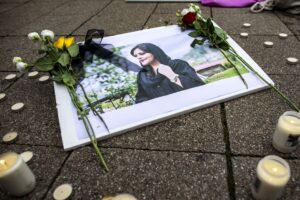
Both Shima and Mahsa say that Iranian women play a key role in the revolution and point to the “Woman, Life, Freedom” movement — born after the death of Jina Amini for not wearing a veil — as the seed of the mobilization of Iranian society.
“The reality is that women started all of this — it must be said. This time we won’t let them steal the revolution from us. This is the women’s movement.”
Amini’s death at the hands of the morality police triggered an unprecedented wave of protests.
“My sisters have never been able to come visit me because they would pay the consequences of the regime,” Shima explains.
“Many people of my generation left the country. But my sisters, who are ten years younger than me, are different — they’re less afraid and they know how to confront the situation.”
 (Europa Press)
How do you see the future of your country?
Mahsa says she is convinced that with the attacks by Israel and the United States, “the map of the Middle East will change.”
“I think there will be big changes,” she says. “I won’t say that something good will happen to Iran, but I was lucky that No Callarem helped us, and I feel the responsibility to be the voice of my people.”
Shima, meanwhile, believes that “the alternative to the ayatollahs is complicated because the opposition has always been heavily repressed in the country.”
“I would like a transition where we are free from the regime and where no one tells me how I must dress or how I must live.”
ORIGINAL PRESS TEXT:
Iranianes a Catalunya: “Les dones vam iniciar el moviment, no ens robaran la revolució”
La guerra a l’Orient Mitjà genera sentiments oposats entre molts iranians a la diàspora. La por i el rebuig a una guerra xoca amb el sentiment d’alliberament que els suposa la mort del líder suprem, Ali Khamenei, cap visible d’un règim totalitari, repressor i sanguinari.
Així ho expressen dues dones iranianes que viuen a Catalunya i amb qui ha pogut parlar 3CatInfo.
La Mahsa Mohebali és escriptora i fa 4 mesos que va arribar aquí gràcies al col·lectiu No Callarem, que en col·laboració amb l’organització internacional Artist at Risk acull artistes en situacions de perill.
La Shima, en canvi, ja fa 10 anys que viu a Barcelona, on va venir per estudiar.
Com vau rebre la notícia de la mort d’Ali Khamenei?
“No ens ho podíem creure”, afirma la Mahsa. “Li vaig dir al meu marit: ‘Et pots creure que ha mort?’ És com un miracle“. Alhora, però, es mostra prudent: “Tenim por que alguna cosa dolenta torni a passar. No pot sortir-ne res bo de bombardejar un país”.
En una entrevista a “El suplement” de Catalunya Ràdio, la Shima explica que celebra la mort de Khamenei: “Per què la meva realitat de vida no podia ser diferent? Per què he de patir un règim que ha pres el control de tot el país i ho hem de pagar nosaltres, com a ciutadans?”
No m’alegro que algú es mori. M’alegro que el mal pugui desaparèixer del món.
La Shima explica que la repressió que pateixen li impedeix comunicar-se directament amb la família per saber si estan bé. En té notícies a través d’una amiga, però trobar la manera de connectar-se a internet a l’Iran, encara que sigui per enviar un text curt, pot comportar represàlies.
“El govern iranià està enviant SMS a la gent notificant: ‘Hem detectat que el vostre dispositiu s’ha connectat amb internet lliure. Vigileu perquè la pròxima vegada tindrà conseqüències’, explica la Shima. I aquestes conseqüències poden ser, des de fer-te signar documents, a imposar-te multes o tancar-te a la presó, assegura.
Què en penseu de la guerra i la postura d’Espanya?
“Jo espero profundament que acabin amb tots”, sentencia la Shima en referència al règim dels aiatol·làs. És contundent en la necessitat d’alliberar el país, i afirma: “No puc entendre aquest posicionament de certa gent contra la guerra sense tenir en compte el que pateix realment el poble de l’Iran”.
“El dolent aquí és la República Islàmica. ‘No a la guerra’, d’acord, però si obrim un camí en el Dret Internacional perquè la gent de l’Iran decideixi el seu futur”, conclou.

La Mahsa, en canvi, afirma que li agrada la postura que ha pres el govern espanyol: “Algú havia de mantenir-se ferm contra aquesta bogeria“, assegura.
Per altra banda, retreu als Estats Units que, si havien d’atacar, no ho fessin abans de la repressió de les manifestacions del mes de gener.
“Sabem que Trump no pensa en els iranians, però ell va dir: ‘Sortiu als carrers, l’ajuda està en camí’. Però l’ajuda va arribar un mes després, quan 20.000 o 30.000 persones ja havien mort. Per descomptat que no ens pensem que Trump sigui el nostre amic, però tens una responsabilitat quan ets un líder o un president d’un país”, explica la Mahsa.
Quin paper hi tenen les dones de l’Iran?
Tant la Shima com la Mahsa tenen clar que les dones iranianes tenen un paper clau en la revolució i reivindiquen el moviment “Dona, Vida, Llibertat“ –nascut arran de la mort de Jina Amini per no portar vel– com l’embrió de la mobilització de la societat iraniana.
La realitat és que les dones han començat tot això, cal dir-ho. Aquesta vegada no deixarem que ens robin la revolució. Això és el moviment de les dones.

“Les meves germanes no han pogut venir mai a veure’m perquè paguen les conseqüències del règim”, explica la Shima. “Moltes persones de la meva generació vam marxar del país, però les meves germanes, que són 10 anys més joves que jo, les veig diferents, no tenen tanta por i saben confrontar”.
Com veieu el futur del vostre país?
La Mahsa es mostra convençuda que, amb els atacs d’Israel i Estats Units, “el mapa de l’Orient Mitjà canviarà“. “Crec que hi haurà grans canvis”, assegura, “no diré que alguna cosa bona li passarà a l’Iran, però he tingut la sort que No Callarem ens ha ajudat, i sento la responsabilitat de ser la veu del meu poble”, explica.
La Shima, per la seva banda, veu que “l’alternativa als aiatol·làs és complicada per la repressió que ha patit sempre l’oposició al país”.
M’agradaria una transició, que estiguéssim lliures de règim i on ningú em digués com m’he de vestir o com he de viure.
